Is an air fryer energy efficient? Yes, generally, an air fryer is more energy efficient than a conventional oven. It uses less energy because it’s smaller and heats up faster. But how much can you really save, and are there ways to make your air frying even cheaper? Let’s explore the energy efficiency of air fryers and how to maximize your savings.
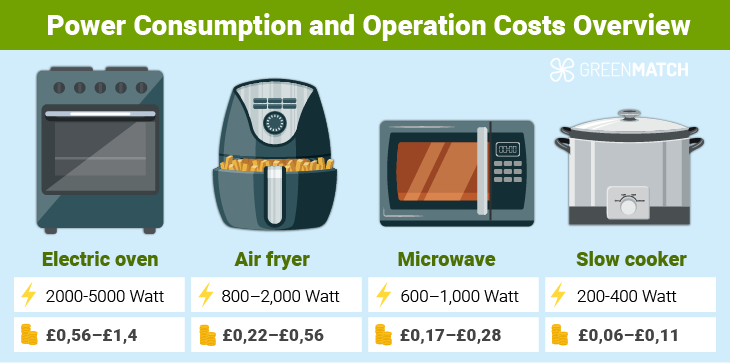
Image Source: cdn.greenmatch.co.uk
Air Fryer Energy Consumption: A Deep Dive
To determine if an air fryer is truly energy efficient, we need to look closely at its energy consumption. Several factors play a crucial role in how much electricity your air fryer uses.
What Impacts Air Fryer Power Usage?
- Air Fryer Wattage: The wattage rating indicates the amount of power the air fryer needs to operate at its highest setting. Common air fryers range from 800 watts to 1800 watts.
- Cooking Time: Shorter cooking times naturally mean less energy consumed. Air fryers are known for faster cooking compared to ovens.
- Preheating: Some recipes suggest preheating your air fryer. While not always necessary, it does consume extra energy.
- Frequency of Use: How often you use your air fryer will significantly impact your overall energy bill.
- Model and Design: Different air fryer models have varying energy efficiencies based on their design and technology.
Air Fryer Wattage vs Oven: A Direct Comparison
The most common question is, how does air fryer wattage compare to an oven? A typical conventional oven uses between 2000 and 5000 watts, much higher than most air fryers. Here’s a table that makes the comparison clearer:
| Appliance | Average Wattage |
|---|---|
| Air Fryer | 800 – 1800 W |
| Conventional Oven | 2000 – 5000 W |
| Toaster Oven | 1200 – 1800 W |
This table shows that air fryers generally use significantly less power than conventional ovens, meaning lower air fryer electricity cost.
Estimating The Running Cost of an Air Fryer
Let’s calculate the approximate running cost of an air fryer. We will use the average US electricity cost, which is around $0.14 per kilowatt-hour (kWh).
Example:
Let’s consider a 1500-watt air fryer used for 30 minutes daily.
- Convert watts to kilowatts: 1500 watts / 1000 = 1.5 kW
- Calculate energy consumption per day: 1.5 kW * 0.5 hours = 0.75 kWh
- Calculate daily cost: 0.75 kWh * $0.14/kWh = $0.105
So, using a 1500-watt air fryer for 30 minutes a day would cost approximately $0.105 per day. Over a month (30 days), this would amount to $3.15.
Air Fryer vs Conventional Oven Efficiency: Is Air Frying Cheaper Than Baking?
The key to air fryer vs conventional oven efficiency lies in how each appliance heats and cooks food.
Why Air Fryers Are More Energy Efficient
- Smaller Space: Air fryers have a much smaller cooking chamber compared to ovens. This means they heat up faster and require less energy to maintain the desired temperature.
- Rapid Air Circulation: Air fryers use rapid air circulation to cook food. This efficient method cooks food evenly and quickly, reducing the overall cooking time and energy consumption.
- No Extensive Preheating: While some recipes suggest preheating, it’s often not necessary for air fryers. Ovens, on the other hand, usually require a longer preheating time, consuming significant energy.
When an Oven Might Be More Efficient
While air fryers are often more energy-efficient, there are situations where an oven might be preferable:
- Large Quantities of Food: If you’re cooking for a large group, an oven’s larger capacity might be more efficient. Cooking multiple batches in an air fryer could negate its energy-saving benefits.
- Certain Baked Goods: Some delicate baked goods, like soufflés, may benefit from the more consistent and gentle heat of an oven.
Air Fryer Energy Comparison: Real-World Scenarios
To further illustrate the air fryer energy comparison, consider these scenarios:
- Scenario 1: Cooking a small batch of fries. An air fryer can cook a small batch of fries in about 15-20 minutes. An oven would take longer to preheat and cook, using considerably more energy.
- Scenario 2: Roasting a whole chicken. An oven is likely more efficient for roasting a whole chicken due to its capacity and even heat distribution.
- Scenario 3: Baking cookies. For a small batch of cookies, an air fryer can be a quick and energy-saving option. For larger batches, an oven is more suitable.
Is Air Frying Cheaper Than Baking? A Summary
In most cases, is air frying cheaper than baking? Yes, primarily due to shorter cooking times and the reduced need for preheating. However, it’s important to consider the specific food and the quantity you’re cooking.
Choosing the Most Energy Efficient Air Fryer
Not all air fryers are created equal. Here’s how to select the most energy efficient air fryer:
Key Features to Look For
- Wattage: Opt for a lower wattage model if possible. However, consider that a lower wattage may result in slightly longer cooking times, potentially negating some energy savings.
- Size: Choose an appropriate size for your needs. A larger air fryer will consume more energy, even if you’re only cooking small portions.
- Energy Star Rating: Look for air fryers with an Energy Star rating, which indicates they meet certain energy efficiency standards. (Note: Energy Star ratings for air fryers are less common than for other appliances, but it’s worth checking.)
- Insulation: Good insulation helps retain heat, reducing the amount of energy needed to maintain the desired temperature.
- Digital Controls: Models with precise temperature and timer controls allow for more accurate cooking, preventing overcooking and wasted energy.
Top Energy-Saving Air Fryer Tips
Even with an energy-efficient model, you can further reduce your air fryer energy consumption with these tips:
- Minimize Preheating: Only preheat if absolutely necessary.
- Cook in Batches: Avoid overcrowding the air fryer basket, as this can increase cooking time and energy usage.
- Keep it Clean: A clean air fryer operates more efficiently. Remove food debris regularly.
- Use the Right Settings: Use the appropriate temperature and cooking time settings for your food.
- Unplug When Not in Use: Prevent phantom energy drain by unplugging your air fryer when it’s not in use.
- Consider Your Recipes: Modify recipes to optimize for air frying. Smaller pieces of food cook faster and more efficiently.
- Avoid Opening Frequently: Opening the air fryer door lets heat escape, increasing cooking time and energy use.
Maximize Savings Now! Real-World Strategies
Beyond choosing the right air fryer and using it efficiently, here are some strategies to maximize your savings:
Compare Energy Costs Regularly
Keep track of your electricity bill and compare your energy usage from month to month. This will help you identify any unexpected increases and adjust your cooking habits accordingly.
Take Advantage of Off-Peak Hours
Some energy providers offer lower rates during off-peak hours. If possible, schedule your air frying during these times.
Invest in Energy Monitoring Tools
Consider using energy monitoring tools to track your air fryer’s energy consumption in real-time. This can help you identify areas where you can improve efficiency.
Consider Solar Power
Give your air fryer a green boost by harnessing the sun’s energy; installing solar panels can slash your dependence on traditional power and trim down those electricity costs.
Fathoming the Long-Term Benefits
Switching to an air fryer can have significant long-term benefits, both for your wallet and the environment.
Reduced Energy Bills
The most obvious benefit is reduced energy bills. By using an air fryer instead of an oven for many of your cooking needs, you can save a significant amount of money over time.
Lower Carbon Footprint
By using less energy, you’re also reducing your carbon footprint. Air fryers are a more environmentally friendly option compared to traditional ovens.
Healthier Cooking
Air fryers require little to no oil, making them a healthier cooking option. This can lead to long-term health benefits and reduced healthcare costs.
Frequently Asked Questions (FAQ)
What is the average wattage of an air fryer?
The average wattage of an air fryer ranges from 800 to 1800 watts.
Can I use my air fryer every day and still save energy?
Yes, if you’re replacing oven usage with your air fryer, you can likely save energy even with daily use, especially for smaller portions and quicker meals.
Who should consider using an air fryer for energy savings?
Anyone who frequently cooks small to medium-sized meals and wants to reduce their energy consumption should consider using an air fryer.
Is it safe to leave an air fryer unattended while cooking?
It’s generally not recommended to leave an air fryer unattended. Always monitor it while it’s in use to prevent potential fire hazards.
How does the size of an air fryer affect its energy consumption?
Larger air fryers generally consume more energy than smaller ones because they have a larger cooking chamber to heat.
What types of food are best cooked in an air fryer for energy efficiency?
Foods that cook quickly and require less preheating, such as fries, chicken wings, and vegetables, are ideal for energy-efficient air frying.
By carefully considering your cooking needs and following these tips, you can maximize the energy efficiency of your air fryer and enjoy significant savings.

I’m the recipe developer and food photographer behind Air Fryer at Tiffany’s. I’m also a wife, mom to two adventurous little boys, registered nurse, and live in the great Midwest. Join me as I show you new ways to use your air fryer that you never knew possible.