Wondering how to convert oven recipes to air fryer? Yes, you can! Air fryers offer a faster and often healthier way to cook many of your favorite oven-baked dishes. This guide will walk you through the ins and outs of oven to air fryer conversion, ensuring you get perfectly cooked results every time.
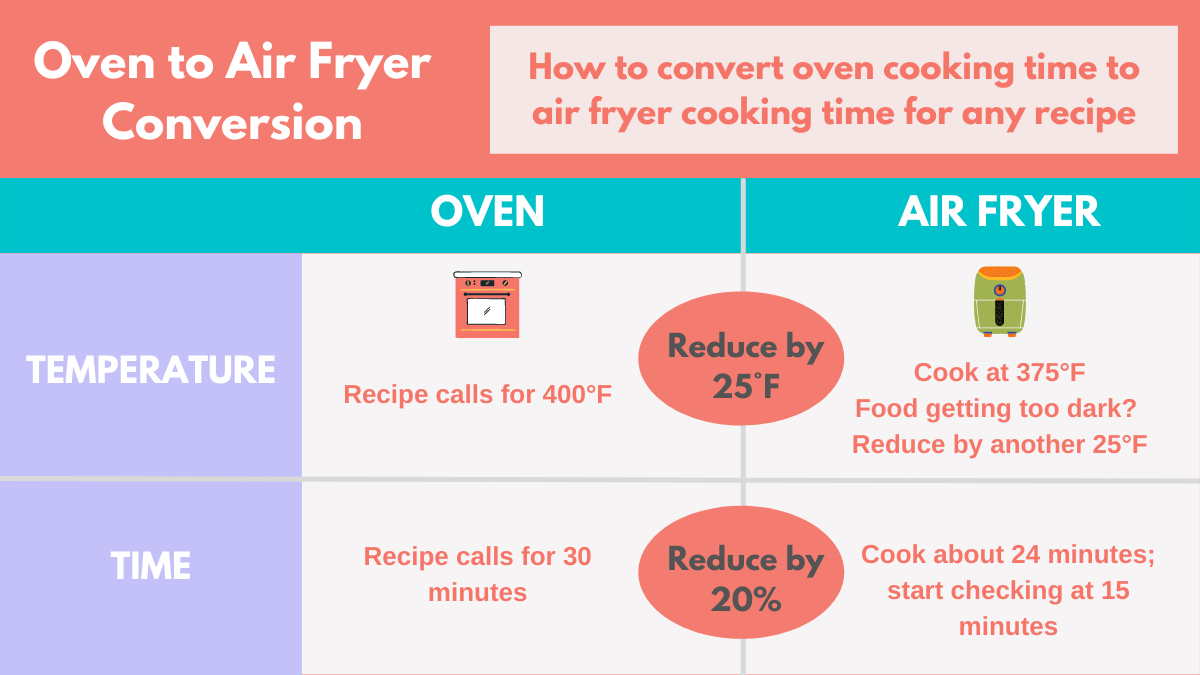
Image Source: thefoodiephysician.com
The Air Fryer Advantage: Why Make the Switch?
Air fryers have surged in popularity, and for good reason. They offer several advantages over traditional ovens:
- Speed: Air fryers preheat much faster than ovens, often in just a few minutes. This translates to quicker cooking times overall.
- Energy Efficiency: Because of their smaller size and rapid heating, air fryers typically use less energy than ovens.
- Crispiness: The circulating hot air in an air fryer creates a crispy exterior on food, similar to deep frying, but with significantly less oil.
- Convenience: Air fryers are compact and easy to clean, making them a convenient option for busy weeknights.
Key Elements in Oven to Air Fryer Conversion
Several factors influence how to successfully transition a recipe from the oven to the air fryer. Grasping these elements is essential for achieving optimal results.
1. Air Fryer Temperature Conversion Chart: Finding the Sweet Spot
The most crucial aspect of oven to air fryer conversion is adjusting the temperature. As a general rule, you’ll typically lower the temperature by about 25-50°F (15-30°C) compared to what the oven recipe calls for. However, this isn’t a one-size-fits-all solution.
Here’s a basic air fryer temperature conversion chart to guide you:
| Oven Temperature (°F) | Air Fryer Temperature (°F) | Air Fryer Temperature (°C) |
|---|---|---|
| 250 | 225 | 107 |
| 275 | 250 | 121 |
| 300 | 275 | 135 |
| 325 | 300 | 149 |
| 350 | 325 | 163 |
| 375 | 350 | 177 |
| 400 | 375 | 190 |
| 425 | 400 | 204 |
| 450 | 425 | 218 |
Important Considerations:
- Type of Food: Delicate foods like cakes may require a smaller temperature reduction (closer to 25°F). Foods that benefit from browning, like roasted vegetables or chicken, might need a larger reduction (closer to 50°F) to prevent burning.
- Air Fryer Model: Different air fryers have varying heating capabilities. It’s wise to consult your air fryer’s manual for specific temperature recommendations.
- Ingredient Density: Thicker cuts of meat or denser items will need lower temps to cook through, where thin cuts and delicate items can take higher heats.
2. Air Fryer Cooking Times: A Speedy Transformation
Air fryers cook food significantly faster than ovens. Air fryer cooking times are typically 20-25% shorter than the oven equivalent. However, this is just an estimate.
- Initial Check: Start by reducing the cooking time by 20%. For example, if the oven recipe calls for 20 minutes, begin by air frying for 16 minutes.
- Frequent Monitoring: Check the food’s progress frequently, especially during the last few minutes of cooking.
- Internal Temperature: Use a meat thermometer to ensure meat and poultry reach a safe internal temperature. This is the most reliable indicator of doneness.
3. The Air Fryer Convection Conversion Secret
Air fryers use a air fryer convection conversion process, meaning they circulate hot air around the food, similar to a convection oven. However, the air circulation is much more concentrated in an air fryer, which is why food cooks faster and crisper.
- Don’t overcrowd: This is very important. If the basket is overfilled, the air will not properly circulate. Food will steam rather than crisp. Cook in batches if needed.
- Single Layer is Best: Arrange food in a single layer in the air fryer basket to ensure even cooking and maximum crispness.
- Shake or Flip: Periodically shake the basket or flip the food halfway through cooking to promote even browning on all sides.
4. Preheating: Getting Things Started Right
- To Preheat or Not to Preheat? Many air fryer recipes call for preheating, but it’s not always necessary. Refer to your air fryer’s manual for specific recommendations.
- Preheating Time: If preheating is recommended, it usually takes only 3-5 minutes.
5. Adding Moisture: Combating Dryness
Air fryers can sometimes dry out food. Here’s how to combat that:
- Oil Spray: Lightly spray food with oil before air frying to promote browning and prevent dryness. Use an oil sprayer rather than pouring oil directly into the basket.
- Marinades and Brines: Marinating or brining meat and poultry can help retain moisture during air frying.
- Sauces: Adding sauces towards the end of the cooking process can add moisture and flavor.
6. Choosing the Right Equipment: Tools for Success
- Air Fryer Basket vs. Tray: Some air fryers have baskets, while others have trays. Use the appropriate accessory for the type of food you’re cooking. Baskets are generally better for foods that need to be shaken or flipped, while trays are useful for delicate items.
- Parchment Paper Liners: Using parchment paper liners can make cleanup easier and prevent food from sticking to the basket. Be sure to use liners specifically designed for air fryers with perforations for good air flow.
- Oven-Safe Dishes: Small oven-safe dishes can be used in the air fryer for dishes like casseroles or baked goods.
Applying the Principles: Converting Oven Recipes to Air Fryer
Let’s look at some examples of how to apply these principles to bake to air fry adjustment:
Example 1: Roasted Chicken
- Oven Recipe: 400°F (200°C) for 1 hour
- Air Fryer Adjustment:
- Temperature: Reduce to 375°F (190°C).
- Time: Reduce to approximately 45 minutes, checking for doneness after 35 minutes.
- Preparation: Pat the chicken dry, spray with oil, and season.
- Cooking: Place chicken in the air fryer basket, ensuring it’s not overcrowded. Flip halfway through. Use a meat thermometer to ensure an internal temperature of 165°F (74°C).
Example 2: Chocolate Chip Cookies
- Oven Recipe: 375°F (190°C) for 10-12 minutes
- Air Fryer Adjustment:
- Temperature: Reduce to 350°F (175°C).
- Time: Reduce to approximately 6-8 minutes, watching carefully to prevent burning.
- Preparation: Place cookies on parchment paper in the air fryer basket.
- Cooking: Cook in batches.
Example 3: French Fries (from Frozen)
- Oven Recipe: 450°F (230°C) for 20-25 minutes
- Air Fryer Adjustment:
- Temperature: Reduce to 425°F (220°C).
- Time: Reduce to approximately 15-20 minutes, shaking the basket frequently.
- Preparation: No extra oil is needed for most frozen french fries.
- Cooking: Cook in batches to avoid overcrowding.
Air Fryer Recipes from Oven: Specific Food Guidance
Here’s some additional guidance for air fryer recipes from oven baking, broken down by food type:
Meat and Poultry: Perfect Protein
- Chicken: Air fry chicken pieces (wings, thighs, drumsticks) at 375°F (190°C) for 20-25 minutes, flipping halfway through. Whole chickens can also be air fried, but may require longer cooking times and lower temperatures.
- Steak: Air fry steak at 400°F (200°C) for 8-12 minutes for medium-rare, depending on thickness.
- Pork Chops: Air fry pork chops at 375°F (190°C) for 12-15 minutes, flipping halfway through.
- Fish: Air fry fish fillets at 375°F (190°C) for 8-10 minutes, depending on thickness.
Vegetables: Crispy Goodness
- Potatoes: Air fry potato wedges or fries at 400°F (200°C) for 15-20 minutes, shaking the basket frequently.
- Broccoli: Air fry broccoli florets at 375°F (190°C) for 8-10 minutes.
- Brussels Sprouts: Air fry Brussels sprouts at 400°F (200°C) for 12-15 minutes, flipping halfway through.
- Asparagus: Air fry asparagus spears at 375°F (190°C) for 5-7 minutes.
Baked Goods: Sweet Treats
- Cookies: As mentioned earlier, reduce temperature and time significantly.
- Cakes: Small cakes or muffins can be baked in the air fryer using oven-safe dishes. Reduce temperature and time.
- Donuts: Air frying donuts can result in a crispy exterior and soft interior.
Trouble-Shooting Air Fryer Cooking Guide for Oven Recipes: Common Problems and Solutions
| Problem | Possible Cause | Solution |
|---|---|---|
| Food is burning | Temperature too high | Lower the temperature by 25-50°F (15-30°C). |
| Food is not cooking through | Temperature too low or cooking time too short | Increase the temperature slightly or cook for a longer period. |
| Food is dry | Overcooking or insufficient moisture | Reduce cooking time, spray with oil, or marinate the food. |
| Food is not crispy | Overcrowding the basket or not enough oil | Cook in batches, ensuring a single layer. Spray with oil before air frying. |
| Uneven cooking | Not shaking or flipping the food | Shake the basket or flip the food halfway through cooking. |
Embracing the Air Fryer
air fryer cooking guide for oven recipes can be a rewarding experience. While there’s a learning curve involved, by following these guidelines and experimenting with different recipes, you’ll quickly become proficient in adapting your favorite oven dishes to the air fryer. Enjoy the speed, convenience, and delicious results!
Frequently Asked Questions (FAQ)
Q: What is the best way to clean my air fryer?
A: Most air fryer baskets and trays are dishwasher-safe. However, it’s always best to consult your air fryer’s manual. For hand washing, use warm, soapy water and a non-abrasive sponge.
Q: Can I use aluminum foil in my air fryer?
A: Yes, but with caution. Make sure the foil doesn’t block airflow and is securely weighed down by food to prevent it from being sucked into the heating element.
Q: Who should buy an air fryer?
A: Anyone who wants a faster, more energy-efficient way to cook their favorite oven-baked foods. They’re also great for people who want to reduce their oil consumption.
Q: What is the ideal oil to use in an air fryer?
A: Oils with high smoke points, such as avocado oil, canola oil, or vegetable oil, are best for air frying.
Q: Can I cook frozen foods in an air fryer?
A: Absolutely! Air fryers are excellent for cooking frozen foods like french fries, chicken nuggets, and pizza rolls. You might need to adjust the cooking time slightly.
Q: What types of food should I avoid cooking in an air fryer?
A: Avoid cooking foods with wet batters, as they can drip and make a mess. Also, be cautious with leafy greens, as they can be blown around by the circulating air.
Q: How is “air fryer convection conversion” calculated?
A: “Air fryer convection conversion” isn’t a precise calculation. It’s an art that involves lowering the temperature (25-50F) and reducing cook time (20-25%), considering food density and desired crispiness, and closely monitoring cooking progression in your own air fryer.
Absolutely! You can safely line your air fryer with specially designed parchment paper, just be sure your food anchors it down to prevent it from soaring into the heating element. Never power up your air fryer with just the parchment paper inside.

I’m the recipe developer and food photographer behind Air Fryer at Tiffany’s. I’m also a wife, mom to two adventurous little boys, registered nurse, and live in the great Midwest. Join me as I show you new ways to use your air fryer that you never knew possible.