The question of whether you can replace a microwave with an air fryer is a resounding “maybe!” While an air fryer can’t exactly replicate every function of a microwave, it offers a compelling microwave alternative for many tasks, especially reheating and cooking certain foods. This guide explores the air fryer vs microwave debate, highlighting the benefits and drawbacks of each appliance to help you decide if making the switch is right for you.
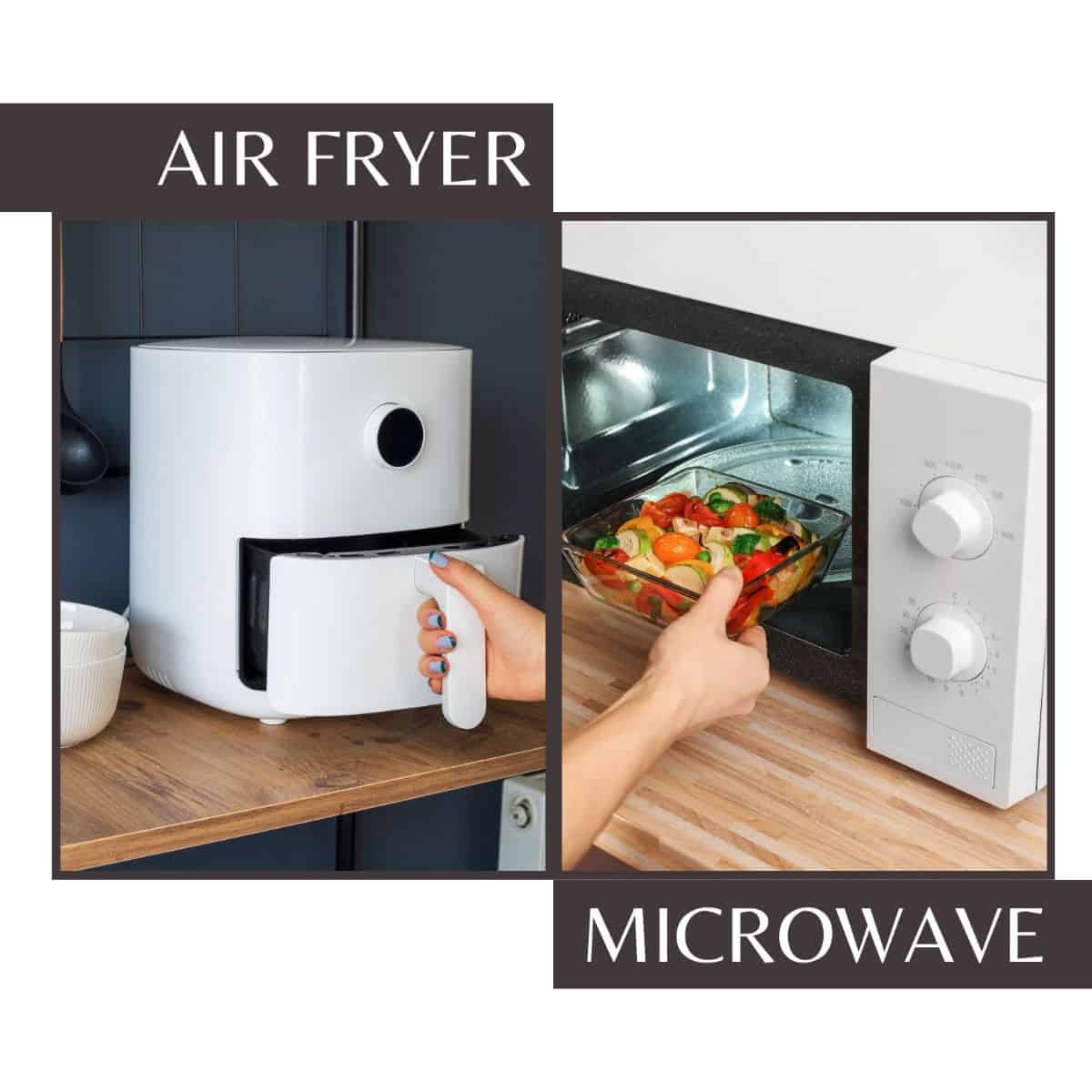
Image Source: www.alsothecrumbsplease.com
Deciding on an Air Fryer as Microwave: Weighing the Options
The air fryer has surged in popularity in recent years. It’s promoted as a healthier way to achieve crispy textures, and its versatility extends beyond just “frying.” But how does it stack up against the convenience of the trusty microwave?
Air Fryer Benefits
- Superior Texture: Air fryers excel at creating crispy exteriors and evenly cooked interiors, something microwaves often struggle with.
- Healthier Cooking: By using little to no oil, air fryers can reduce the fat content of your food compared to traditional frying methods. This addresses the ‘is air fryer healthier’ question.
- Versatility: Air fryers can bake, roast, grill, and, of course, “fry” foods.
- Compact Size: Many air fryers are relatively small, making them ideal for smaller kitchens.
- Faster Cooking Times: For certain foods, the air fryer cooking time can be shorter than using a conventional oven.
Microwave Benefits
- Speed: Microwaves are incredibly fast for reheating and cooking.
- Convenience: Microwaves offer unmatched convenience for quick meals and snacks.
- Simple Operation: Microwaves are generally very easy to use.
- Reheating Liquids: Microwaves are perfect for quickly heating liquids like soup or coffee.
Exploring Air Fryer vs Microwave: A Head-to-Head Comparison
To really see if an air fryer can be your microwave replacement, let’s compare them across key areas.
Reheating Food
| Feature | Air Fryer | Microwave |
|---|---|---|
| Texture | Food retains its crispy texture; avoids sogginess. Great for pizza, fries, and fried chicken. | Food can become soggy or rubbery. |
| Speed | Slightly slower than a microwave, but the improved texture is often worth the extra minute or two. | Very fast. Ideal for quickly warming up a single serving. |
| Evenness | Generally reheats food more evenly than a microwave. | Can sometimes result in uneven heating, with hot spots and cold spots. |
| Best For | Foods that benefit from crispiness (pizza, fries, chicken, etc.). | Liquids, single servings, and items where texture isn’t critical. |
| Considerations | May require flipping food halfway through for even reheating. | Needs microwave-safe containers. Overheating can lead to explosions or dried-out food. |
The air fryer reheating capability is a key reason many consider it a microwave alternative. The ability to revive leftovers without sacrificing texture is a major win. This particularly addresses the question of using an ‘air fryer for leftovers.’
Cooking Food
| Feature | Air Fryer | Microwave |
|---|---|---|
| Versatility | Bakes, roasts, grills, and “fries” food. Great for chicken, vegetables, and even desserts. | Limited to steaming, reheating, and cooking some specific dishes. |
| Cooking Time | Varies depending on the food, but often faster than a conventional oven. | Generally faster for cooking single servings or simple dishes. |
| Texture | Creates crispy exteriors and evenly cooked interiors. | Can result in steamed or rubbery textures, lacking the browning and crispiness achieved with an air fryer. |
| Best For | Cooking meals from scratch, especially those that benefit from crisping or browning. | Cooking simple meals like baked potatoes, steaming vegetables, and heating pre-packaged meals. |
| Considerations | Requires some experimentation to determine optimal cooking times and temperatures. May require preheating. | Limited cooking capabilities. Not suitable for foods requiring crisping or browning. |
Convenience
| Feature | Air Fryer | Microwave |
|---|---|---|
| Ease of Use | Relatively easy to use, with pre-set programs for common foods on many models. Requires some experimentation. | Extremely easy to use. Simple controls and straightforward operation. |
| Cleaning | Baskets and trays are often dishwasher-safe. Some models may require hand-washing of the heating element. | Easy to clean with a damp cloth. |
| Footprint | Varies depending on the model, but generally compact enough for most countertops. | Compact and easily fits on countertops. |
| Overall | Offers a convenient way to cook a variety of foods with minimal effort, but requires some learning curve. | Unmatched convenience for quick meals and reheating. |
Consider the air fryer convenience in your decision. While it offers versatility, it may require a bit more effort than simply popping something in the microwave.
Grasping Air Fryer as a Microwave Replacement: Scenarios
Here are some scenarios where an air fryer can effectively replace a microwave:
- Reheating Pizza: Say goodbye to soggy pizza! An air fryer will restore the crispy crust and melty cheese.
- Crispy Leftovers: Fried chicken, French fries, and other fried foods regain their original texture when reheated in an air fryer.
- Cooking Small Meals: For single-serving meals like chicken breasts, vegetables, or even small baked goods, an air fryer is a great option.
- Heating Frozen Foods: Many frozen snacks and appetizers cook perfectly in an air fryer, achieving a crispy exterior.
Here are scenarios where a microwave is preferable:
- Heating Liquids: Microwaves are the fastest and easiest way to heat liquids like coffee, tea, or soup.
- Steaming Vegetables: Microwaves are ideal for quickly steaming vegetables while retaining their nutrients.
- Melting Butter or Chocolate: Microwaves can quickly and easily melt butter or chocolate.
- Emergency Cooking when Short on Time: Microwaves are fastest to prepare basic recipes.
Diving Deep into Air Fryer Cooking Time
Understanding air fryer cooking time is crucial for successful use. Factors that affect cooking time include:
- Type of Food: Different foods require different cooking times. For example, vegetables typically cook faster than meats.
- Size of Food: Smaller pieces of food will cook faster than larger pieces.
- Air Fryer Model: Different air fryer models may have slightly different cooking times.
- Temperature: Higher temperatures will result in faster cooking times.
General Air Fryer Cooking Time Guidelines:
| Food | Temperature (°F) | Time (Minutes) |
|---|---|---|
| French Fries | 400 | 12-15 |
| Chicken Breast | 375 | 15-20 |
| Salmon | 400 | 8-12 |
| Brussels Sprouts | 375 | 10-15 |
| Pizza (Reheating) | 350 | 3-5 |
Tips for Perfect Air Frying:
- Preheat the Air Fryer: Preheating helps ensure even cooking.
- Don’t Overcrowd the Basket: Overcrowding can lead to uneven cooking.
- Shake or Flip Food: Shake or flip food halfway through cooking to ensure even browning.
- Use a Meat Thermometer: Use a meat thermometer to ensure that meat is cooked to a safe internal temperature.
- Experiment and Adjust: Air frying is a learning process. Experiment with different cooking times and temperatures to find what works best for you.
Deciphering Microwave Replacement: Factors to Consider
Before ditching your microwave entirely, consider these factors:
- Your Cooking Habits: Do you primarily use your microwave for reheating or cooking full meals? If you mainly reheat, an air fryer might be a good replacement. If you cook a variety of dishes, you might need both appliances.
- Your Kitchen Space: Air fryers take up counter space. If you have limited space, you might need to choose between the two.
- Your Budget: Air fryers range in price from affordable to quite expensive. Consider your budget when making your decision.
- Your Dietary Needs: If you’re looking to reduce your fat intake, an air fryer can be a great option.
- The Air Fryer’s Features: Not all air fryers are created equal. Some may have extra functionality like grilling, dehydrating, or even rotisserie functions. Consider your needs for cooking methods and if a fancier air fryer might suit you.
Fathoming Air Fryer Health Aspects: Is Air Fryer Healthier?
One of the main selling points of air fryers is their perceived health benefits. But is air frying actually healthier?
- Reduced Fat Content: Air fryers use significantly less oil than traditional frying methods, which can significantly reduce the fat content of your food.
- Fewer Calories: Because air frying reduces the fat content of food, it can also reduce the calorie count.
- Reduced Acrylamide Formation: Acrylamide is a potentially harmful chemical that can form when starchy foods are cooked at high temperatures. Air frying may reduce the formation of acrylamide compared to deep frying.
- Versus Microwave: As opposed to radiation-based microwaves that might change nutrients (in some cases for the better, in others for the worse), air fryers just use heat.
Important Considerations:
- Air frying is only healthier if you’re using it as a replacement for less healthy cooking methods like deep frying.
- Air-fried foods can still be high in calories and unhealthy if you’re not careful about what you’re cooking.
- Like any cooking method, moderation is key.
Air Fryer for Leftovers: A Detailed Guide
The air fryer truly shines when it comes to reheating leftovers. Here’s a guide to reheating common foods in an air fryer:
- Pizza: Reheat at 350°F for 3-5 minutes for a crispy crust.
- Fried Chicken: Reheat at 350°F for 5-7 minutes for crispy skin.
- French Fries: Reheat at 400°F for 3-5 minutes for crispy fries.
- Burgers: Reheat at 350°F for 3-5 minutes (remove toppings first).
- Steak: Reheat at 350°F for 3-5 minutes for best results.
Tips for Reheating Leftovers in an Air Fryer:
- Preheat the air fryer for best results.
- Don’t overcrowd the basket.
- Flip or shake the food halfway through cooking.
- Use a meat thermometer to ensure meat is heated to a safe internal temperature.
Conclusion
So, can an air fryer replace a microwave? The answer depends on your individual needs and cooking habits. If you’re looking for a healthier way to reheat food and cook small meals, and you value crispy textures, an air fryer can be an excellent microwave replacement. However, if you primarily use your microwave for heating liquids and quick tasks, you might want to keep both appliances. Ultimately, the best decision depends on what you value most in your kitchen.
Frequently Asked Questions (FAQ)
Q: Can I cook raw meat in an air fryer?
A: Yes, you can cook raw meat in an air fryer. Be sure to use a meat thermometer to ensure that it reaches a safe internal temperature.
Q: Can I put foil in an air fryer?
A: Yes, you can put foil in an air fryer, but make sure it doesn’t block airflow.
Q: Is it safe to use plastic containers in an air fryer?
A: No, never use plastic containers in an air fryer. They will melt.
Q: How do I clean my air fryer?
A: Most air fryer baskets and trays are dishwasher-safe. You can also wash them by hand with soap and water.
Unlock crispy, golden perfection with your air fryer by focusing on foods that crave that satisfying crunch. Think succulent chicken wings, vibrant roasted vegetables, shoestring fries transformed into addictive bites, and even leftover pizza reborn with a delightfully crisp crust.

I’m the recipe developer and food photographer behind Air Fryer at Tiffany’s. I’m also a wife, mom to two adventurous little boys, registered nurse, and live in the great Midwest. Join me as I show you new ways to use your air fryer that you never knew possible.