Yes, air fryers use electricity, but whether they use a lot is relative. An air fryer’s energy consumption depends on its wattage and how long you use it. This article breaks down air fryer power usage, helps you estimate the air fryer electricity cost, and compares it to other appliances like ovens.
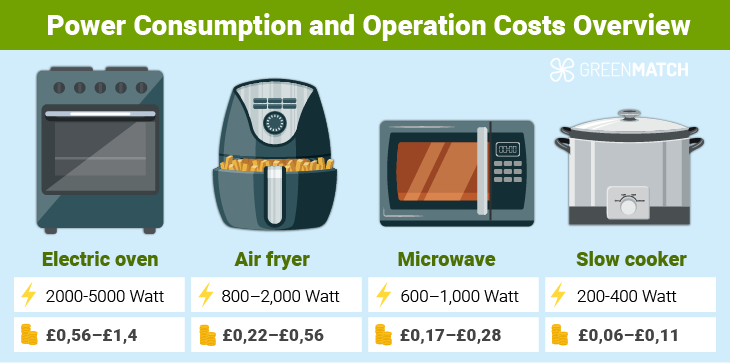
Image Source: cdn.greenmatch.co.uk
Dissecting Air Fryer Power Usage
To figure out if your air fryer is a power hog, we need to look at some key factors. The main one is the air fryer wattage.
Air Fryer Wattage: The Core Number
Most air fryers range from 800 to 2000 watts. The wattage is usually printed on the appliance itself, either on the bottom or on a sticker near the power cord. It may also be in the owner’s manual. This number tells you how much electricity the air fryer needs to run at its highest power setting.
- Lower Wattage (800-1000W): These are typically smaller air fryers, suitable for individuals or couples.
- Medium Wattage (1200-1500W): A common range, suitable for small families.
- Higher Wattage (1700-2000W): Larger air fryers that can cook for bigger groups or larger portions.
Calculating Air Fryer Energy Consumption
Once you know the wattage, you can calculate the air fryer energy consumption in kilowatt-hours (kWh), which is how electricity is billed. Here’s the formula:
(Wattage / 1000) x Hours Used = kWh
For example, let’s say you have a 1500-watt air fryer and you use it for 30 minutes (0.5 hours) daily.
(1500 / 1000) x 0.5 = 0.75 kWh per day
Air Fryer Electricity Cost: What’s It Going to Cost Me?
Now that we know the kWh usage, we can estimate the cost. This depends on your electricity rate, which you can find on your electricity bill. Let’s assume an average rate of $0.15 per kWh.
kWh per day x Electricity Rate = Daily Cost
- 75 kWh x $0.15/kWh = $0.11 per day
So, using the 1500-watt air fryer for 30 minutes a day would cost you roughly 11 cents per day. That’s not a huge sum, but it adds up over time.
Yearly Air Fryer Running Cost
To estimate the yearly cost, simply multiply the daily cost by 365:
$0.11 x 365 = $40.15 per year
Air Fryer vs Oven Electricity: A Showdown
Many people wonder if air fryers are more energy-efficient than ovens. The answer is generally yes, but it depends on a few factors.
Oven Inefficiencies
Conventional ovens need to heat a large space, which takes a lot of energy. They also take time to preheat, which wastes electricity. Furthermore, the insulation might not be perfect, leading to heat loss and more energy usage.
Air Fryer Advantages
Air fryers, on the other hand, are smaller and heat up much faster. This means they use less electricity to reach the desired temperature and don’t waste as much energy during preheating.
Comparing Power Consumption
Let’s look at a direct comparison, considering cooking the same food item (e.g., chicken wings) in both an air fryer and an oven.
| Appliance | Wattage | Cooking Time | kWh Used | Estimated Cost (at $0.15/kWh) |
|---|---|---|---|---|
| Air Fryer (1500W) | 1500 | 20 minutes | 0.5 kWh | $0.075 |
| Oven (3000W) | 3000 | 30 minutes | 1.5 kWh | $0.225 |
As you can see, the air fryer uses significantly less electricity in this scenario.
Factors Affecting the Comparison
- Oven Size: A large oven will always use more electricity than a small air fryer.
- Cooking Temperature: Higher temperatures require more energy.
- Cooking Time: Longer cooking times increase energy consumption.
- Oven Efficiency: Modern, well-insulated ovens are more efficient.
- Air Fryer Model: Different air fryer models have different power consumption levels.
Factors Influencing Air Fryer Energy Efficiency
The air fryer energy efficiency is affected by several factors. Knowing these can help you optimize your usage and minimize costs.
Air Fryer Size and Capacity
Smaller air fryers generally use less electricity than larger ones. If you usually cook small portions, a smaller air fryer might be more energy-efficient.
Preheating Needs
Some air fryers require preheating, while others don’t. Preheating adds to the overall energy consumption. Look for models that don’t need preheating to save energy.
Cooking Time and Temperature
Lower cooking temperatures and shorter cooking times will always save energy. Experiment with recipes to find the optimal settings for your air fryer.
Insulation
Better insulation helps retain heat and reduces the amount of energy needed to maintain the desired temperature.
Digital vs. Manual Controls
Digital controls can sometimes be more precise, leading to better temperature control and more efficient energy use.
Tips to Minimize Air Fryer Electricity Cost
Here are some practical tips to reduce your air fryer running cost:
- Cook Efficiently: Cook larger batches when possible to minimize the number of times you need to use the air fryer.
- Avoid Preheating (If Possible): Choose recipes and air fryers that don’t require preheating.
- Clean Regularly: A clean air fryer operates more efficiently.
- Use the Right Size: Choose an air fryer that matches your typical cooking needs.
- Turn it Off: Always turn off and unplug your air fryer when not in use.
- Consider Off-Peak Hours: If your electricity company offers lower rates during certain hours, try to use your air fryer during those times.
- Compare Recipes: Look for recipes that require shorter cooking times or lower temperatures.
- Check the Seal: Make sure the air fryer’s door or basket seals properly to prevent heat loss.
Deciphering Air Fryer Wattage and Voltage
Air fryers, like most kitchen appliances, operate on a specific voltage and wattage. It is important to ensure that the air fryer’s voltage matches your home’s electrical system (typically 120V in North America and 220-240V in many other countries).
Voltage Compatibility
Using an appliance with the wrong voltage can be dangerous and cause damage to the appliance or your electrical system. Always check the voltage rating on the air fryer before plugging it in.
Wattage and Circuit Overload
The air fryer wattage determines how much power it draws from your electrical circuit. If you plug too many high-wattage appliances into the same circuit, it can overload the circuit and trip the breaker.
Understanding Amperage
Amperage (amps) is another important electrical term. It represents the flow of electrical current. You can calculate the amperage an air fryer draws using the following formula:
Amps = Watts / Volts
For example, a 1500-watt air fryer operating on 120 volts would draw:
1500 / 120 = 12.5 amps
Most household circuits are rated for 15 or 20 amps. So, you need to make sure that the air fryer’s amperage, combined with other appliances on the same circuit, doesn’t exceed the circuit’s rating.
Grasping Air Fryer Maintenance for Energy Savings
Regular maintenance of your air fryer is vital not only for its longevity but also for maintaining its energy efficiency. A well-maintained air fryer operates optimally, consuming less power and delivering consistent results.
Cleaning Frequency
Frequent cleaning is key. Food residue and grease buildup can impede the air fryer’s heating elements, forcing it to work harder and consume more electricity.
Proper Cleaning Techniques
- Unplug the air fryer: Always unplug the air fryer before cleaning.
- Cool down: Allow the air fryer to cool down completely before cleaning.
- Remove basket and pan: Remove the basket and pan and wash them with warm, soapy water.
- Clean the interior: Wipe the interior of the air fryer with a damp cloth.
- Avoid harsh chemicals: Don’t use abrasive cleaners or scouring pads, as they can damage the non-stick coating.
- Dry thoroughly: Make sure all parts are completely dry before reassembling the air fryer.
Inspecting the Heating Element
Periodically check the heating element for any signs of damage or excessive buildup. A damaged heating element can lead to inefficient heating and increased energy consumption.
Checking the Fan
The fan is responsible for circulating hot air inside the air fryer. Ensure the fan is clean and spins freely. A malfunctioning fan can affect cooking performance and energy efficiency.
Air Fryer Technology and Electricity Consumption
Air fryer technology is continuously evolving, with newer models often incorporating features designed to enhance energy efficiency.
Advanced Heating Systems
Some air fryers use advanced heating systems that heat up faster and maintain temperature more accurately, reducing energy consumption.
Smart Features
Smart air fryers may include features like automatic shut-off, pre-programmed cooking settings, and energy-saving modes.
Insulation Improvements
Manufacturers are also focusing on improving insulation to minimize heat loss and improve energy efficiency.
Material Science Advancements
The materials used in the air fryer’s construction can also impact energy efficiency. Some materials conduct heat more efficiently, reducing the amount of energy needed to reach the desired temperature.
Fathoming Long-Term Cost Savings
While the initial cost of an air fryer might seem like an expense, it can lead to long-term cost savings by reducing electricity consumption, cooking oil usage, and reliance on takeout meals.
Reduced Electricity Bills
As demonstrated earlier, air fryers generally use less electricity than conventional ovens, resulting in lower electricity bills.
Less Cooking Oil
Air fryers use little to no cooking oil, which can save you money on groceries and improve your health.
Fewer Takeout Meals
Air fryers make it easy to cook quick and healthy meals at home, reducing the need to order takeout.
Extending Appliance Lifespan
Proper maintenance and care can extend the lifespan of your air fryer, saving you money on replacement costs.
FAQ: Air Fryer Electricity Consumption
Here are some frequently asked questions about air fryer electricity consumption:
- What is the average wattage of an air fryer? The average wattage ranges from 800 to 2000 watts.
- Can I use an air fryer on a solar panel system? Yes, but make sure your solar panel system can handle the air fryer’s wattage.
- Who is more energy-efficient, an air fryer or a microwave? Microwaves are generally more energy-efficient for reheating food, but air fryers are better for cooking crispy foods.
- What is the best way to save energy when using an air fryer? Use the air fryer efficiently, avoid preheating, and clean it regularly.
- What affects air fryer energy consumption the most? The air fryer wattage, cooking time, and temperature.
- What is air fryer kilowatt usage based on? Air fryer kilowatt usage is based on the appliance’s wattage and the length of time it’s used.
- Can I leave my air fryer plugged in? It’s best to unplug it when not in use to save energy and prevent electrical hazards.
- Is air fryer power usage different in older models? Typically, yes, older models may lack the energy-efficient technology found in newer versions.
Mastering your air fryer’s energy demands is within reach. By thoughtfully weighing these elements and putting the advice into practice, you’ll gain the confidence to understand and control its power usage, keeping this culinary marvel both a trusty and economical kitchen companion.

I’m the recipe developer and food photographer behind Air Fryer at Tiffany’s. I’m also a wife, mom to two adventurous little boys, registered nurse, and live in the great Midwest. Join me as I show you new ways to use your air fryer that you never knew possible.