Are air fryers like deep fryers? The short answer is no, although both cook food. A deep fryer uses hot oil to fully submerge food, while an air fryer uses hot air circulating around the food. This article will explore the differences between an air fryer and a deep fryer, looking at the pros and cons of each, and helping you decide which appliance is right for you.
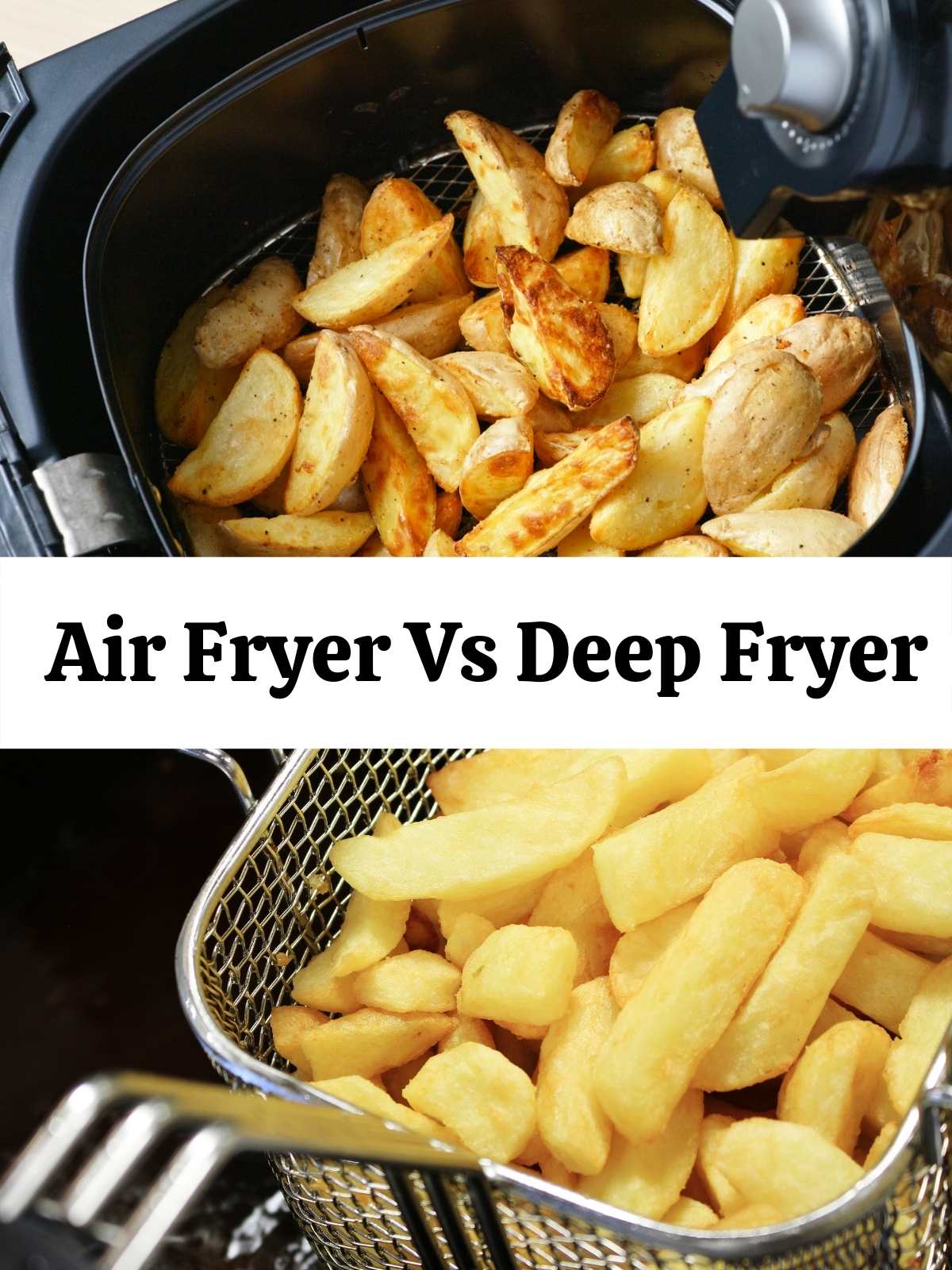
Image Source: healthmylifestyle.com
Air Fryer vs Deep Fryer: A Side-by-Side Look
The main difference between an air fryer and a deep fryer is how they cook food. A deep fryer uses a large amount of oil to fully submerge the food, while an air fryer uses hot air and only a small amount of oil (or none at all). This difference leads to other differences in the cooking process, the taste and texture of the food, and the health benefits or risks.
How They Cook
Air Fryer Cooking Process
Air fryers cook food using a process called convection. A heating element heats the air inside the air fryer, and a fan circulates that hot air around the food. This creates a crispy exterior and cooks the inside of the food at the same time.
Deep Fryer Cooking Process
Deep fryers cook food by submerging it in hot oil, typically between 350°F and 400°F. The hot oil quickly cooks the outside of the food, creating a crispy and golden-brown crust. The inside of the food is cooked by the heat of the oil as well.
Taste and Texture
Air Fryer Food Texture
Air fryers can create crispy food, but the texture is different from deep-fried food. Air-fried food is often drier and less greasy than deep-fried food. While it can achieve a good level of crispness, it may not be as uniformly golden brown as deep-fried items.
Air Fryer Taste Compared to Deep Fryer
The taste of air-fried food is also different from deep-fried food. Because air fryers use less oil, the food has a less rich and fatty flavor. Some people prefer this lighter taste, while others miss the flavor of deep-fried food.
Deep Fried Food Texture
Deep frying gives food a very crispy outer layer and a moist interior. The hot oil quickly seals the outside, preventing moisture from escaping. This results in a distinctly rich and indulgent texture.
Deep Fried Food Taste
The high amount of oil used in deep frying contributes to the food’s rich and savory taste. Many enjoy the taste of deep-fried food because of the way the oil interacts with the ingredients, creating a unique and satisfying flavor.
Health Considerations
Air Fryer Health Benefits
Air fryers are often seen as a healthier alternative to deep fryers because they use much less oil. This can lead to:
- Lower calorie intake: Less oil means fewer calories.
- Reduced fat consumption: Especially saturated and trans fats.
- Fewer acrylamides: These harmful compounds form when starchy foods are cooked at high temperatures, and air frying tends to produce less of them compared to deep frying.
Deep Fryer Health Risks
Deep frying is linked to several health risks due to the high amount of oil used:
- High calorie intake: This can lead to weight gain and related health problems.
- Increased risk of heart disease: Due to high levels of saturated and trans fats.
- Formation of harmful compounds: Such as acrylamides and advanced glycation end products (AGEs), which can contribute to inflammation and other health issues.
Oil Usage
Air Fryer Oil Usage
Air fryers use very little oil. Some recipes don’t need any oil, while others might use a tablespoon or two to help with browning and crisping.
Deep Fryer Oil Usage
Deep fryers require a significant amount of oil – often several cups – to fully submerge the food. The oil also needs to be replaced regularly, as it degrades with use.
Pros and Cons
To help you decide between an air fryer and a deep fryer, here’s a breakdown of the pros and cons of each:
Air Fryer
Pros:
- Healthier: Uses significantly less oil, reducing calories and fat intake.
- Easy to use: Simple controls and often pre-set programs.
- Easy to clean: Most have removable, dishwasher-safe parts.
- Versatile: Can be used to cook a variety of foods, from fries to chicken to vegetables.
- Safer: Less risk of oil splatters and burns compared to deep frying.
- Less odor: Doesn’t fill your kitchen with a strong frying smell.
Cons:
- Taste and texture: May not replicate the exact taste and texture of deep-fried food.
- Cooking capacity: Smaller capacity compared to some deep fryers, may require cooking in batches.
- Can be noisy: Some models can be quite loud.
- Not ideal for all foods: Some foods don’t air fry well, such as battered foods.
Deep Fryer
Pros:
- Authentic taste and texture: Creates the classic deep-fried taste and crispy texture.
- Larger capacity: Can cook larger quantities of food at once.
- Ideal for certain foods: Works well for battered foods and other items that need to be fully submerged in oil.
Cons:
- Unhealthy: High in calories and fat.
- Difficult to clean: Can be messy and time-consuming to clean.
- Requires a lot of oil: Can be expensive to purchase and dispose of oil.
- Can be dangerous: Risk of oil splatters and burns.
- Strong odor: Fills your kitchen with a strong frying smell.
- Higher acrylamide formation: Due to high temperatures and oil interaction.
Air Frying vs Deep Frying: Detailed Comparison
Here’s a table summarizing the key differences between air frying and deep frying:
| Feature | Air Fryer | Deep Fryer |
|---|---|---|
| Cooking Method | Hot air circulation | Submersion in hot oil |
| Oil Usage | Little to none | Large amount |
| Healthiness | Healthier option | Less healthy option |
| Taste & Texture | Crispy, drier | Very crispy, rich and oily |
| Cleaning | Easy, dishwasher-safe parts | Difficult, messy |
| Safety | Safer, less splatter | Risk of oil splatters and burns |
| Cooking Time | Can be slightly longer | Generally faster |
| Versatility | Wide range of foods | Best for specific deep-fried items |
| Odor | Minimal | Strong frying smell |
| Acrylamide Formation | Lower | Higher |
Which to Choose?
The choice between an air fryer and a deep fryer depends on your priorities:
- Choose an air fryer if: You prioritize health, ease of use, easy cleanup, and versatility. You’re willing to sacrifice some of the authentic deep-fried taste and texture for a healthier option.
- Choose a deep fryer if: You prioritize the classic deep-fried taste and texture above all else. You’re okay with the health risks, the mess, and the extra effort required.
Consider these questions to help you decide:
- How often will you use it? If you only deep fry occasionally, an air fryer might be a good compromise.
- What kinds of foods do you want to cook? If you primarily want to cook battered foods, a deep fryer might be a better choice.
- What is your budget? Air fryers and deep fryers are available at a range of price points.
- How much space do you have? Consider the size of each appliance and the space you have available in your kitchen.
Making the Most of Your Air Fryer
If you decide to go with an air fryer, here are some tips for getting the best results:
- Don’t overcrowd the basket: This will prevent the food from cooking evenly.
- Use a little oil: A light coating of oil can help with browning and crisping.
- Shake or flip the food halfway through: This will ensure that it cooks evenly on all sides.
- Preheat the air fryer: This can help the food cook more quickly and evenly.
- Experiment with different recipes: There are many air fryer recipes available online and in cookbooks.
Tips to Stay Healthy When Deep Frying
If you are opting for Deep Frying, here are some tips to minimize health risks:
- Choose the Right Oil: Opt for oils with higher smoke points and stability, such as avocado oil, refined coconut oil, or refined peanut oil. Avoid oils high in polyunsaturated fats.
- Maintain the Correct Temperature: Keep the oil temperature between 325°F and 375°F to prevent excessive oil absorption and acrylamide formation.
- Avoid Overcrowding: Fry food in batches to maintain the oil temperature. Overcrowding lowers the temperature, causing food to absorb more oil.
- Use Fresh Oil: Change the oil regularly to avoid the buildup of unhealthy compounds. Discard oil that appears dark, has a bad odor, or becomes foamy.
- Drain Excess Oil: After frying, place the food on a wire rack to drain excess oil. This helps reduce the fat content.
- Moderation: Enjoy deep-fried foods in moderation as an occasional treat rather than a dietary staple.
- Combine with Healthy Sides: When consuming deep-fried foods, pair them with healthier sides like salads or steamed vegetables to balance your meal.
Frequently Asked Questions (FAQ)
Can I use an air fryer to make deep-fried foods?
Yes, you can use an air fryer to make healthier versions of deep-fried foods. While the taste and texture won’t be exactly the same, you can still achieve a crispy result with less oil.
What foods are best cooked in an air fryer?
Air fryers are great for cooking a variety of foods, including French fries, chicken wings, vegetables, and even desserts.
What foods are best cooked in a deep fryer?
Deep fryers are best for cooking foods that need to be fully submerged in oil, such as battered foods, doughnuts, and certain types of fried chicken.
Is it safe to use an air fryer?
Yes, air fryers are generally safe to use. However, it’s important to follow the manufacturer’s instructions and take precautions to avoid burns.
How do I clean an air fryer?
Most air fryers have removable, dishwasher-safe parts. You can also clean them by hand with soap and water.
How do I dispose of used deep fryer oil?
Once the oil has cooled to room temperature, transfer it to an airtight container, such as its original bottle, and toss it in your household trash. Remember, never pour oil down the drain; it’s a guaranteed way to cause costly pipe clogs. Check with your local municipality, as many offer convenient oil recycling options.

I’m the recipe developer and food photographer behind Air Fryer at Tiffany’s. I’m also a wife, mom to two adventurous little boys, registered nurse, and live in the great Midwest. Join me as I show you new ways to use your air fryer that you never knew possible.