Is an air fryer better than a deep fryer? The answer depends on your priorities. Air fryers offer a healthier, more convenient alternative with less oil, while deep fryers excel at achieving that classic, crispy texture and flavor. This guide provides an in-depth air fryer vs deep fryer comparison to help you decide which appliance best suits your needs.
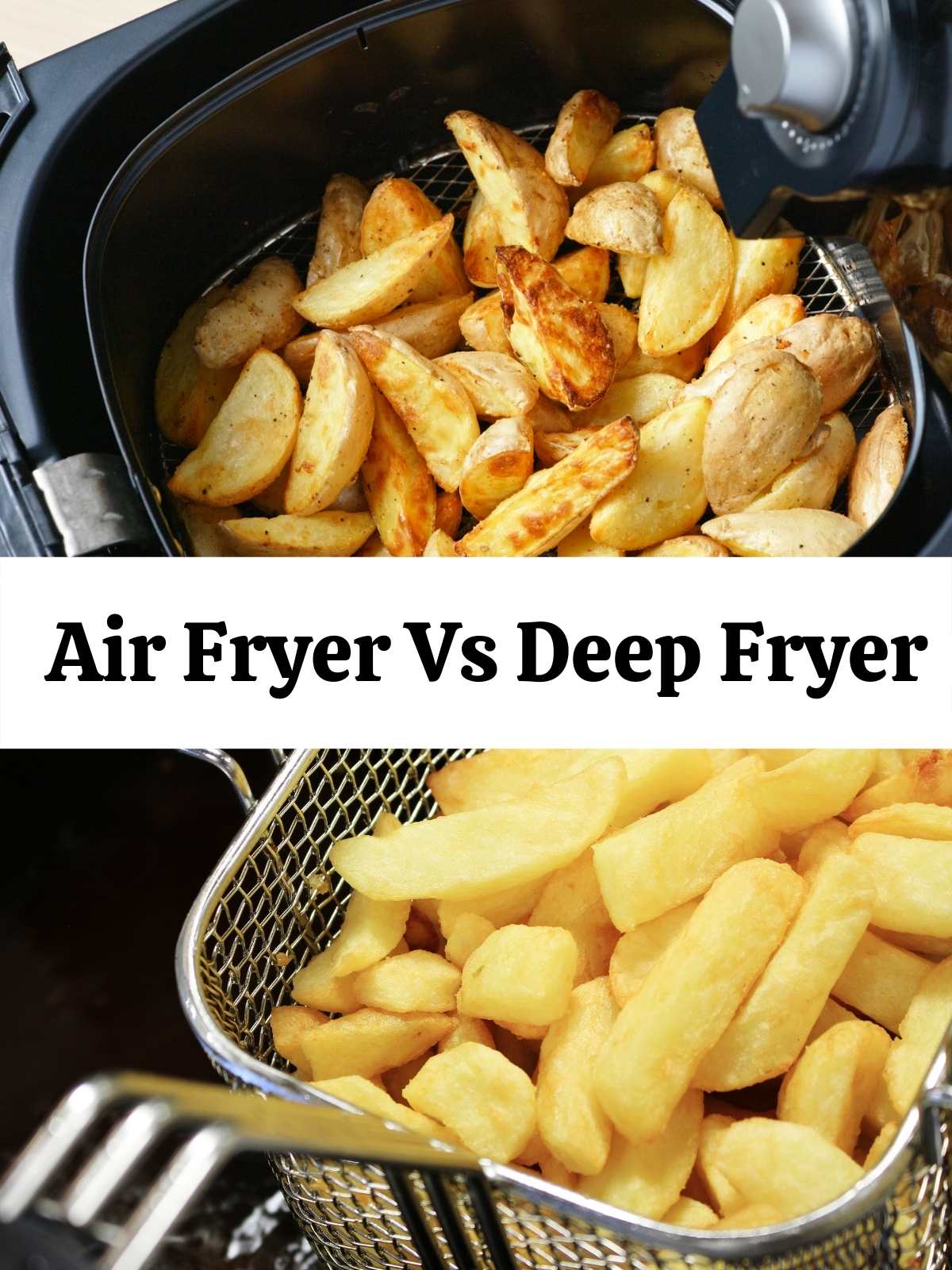
Image Source: healthmylifestyle.com
Air Fryer vs Deep Fryer Comparison: A Head-to-Head Matchup
Choosing between an air fryer and a deep fryer requires careful consideration of several factors. Let’s break down the air fryer vs deep fryer comparison, examining key differences in health, taste, convenience, and more.
| Feature | Air Fryer | Deep Fryer |
|---|---|---|
| Health | Significantly healthier, uses little to no oil | Less healthy, requires substantial oil immersion |
| Taste | Similar to deep-fried, but slightly drier | Classic deep-fried taste, rich and crispy |
| Convenience | Easier to clean, safer to operate | Messier, requires careful oil management |
| Cooking Time | Can be faster for some foods | Can be faster for some foods |
| Oil Consumption | Minimal, often just a tablespoon or spray | High, requires several cups of oil |
| Versatility | Versatile, can bake, roast, grill, and fry | Primarily for deep frying |
| Cost | Generally comparable to deep fryers | Generally comparable to air fryers |
Health Showdown: Air Fryer Healthier Than Deep Fryer?
The most significant difference between air fryers and deep fryers lies in their impact on health. Is the air fryer healthier than the deep fryer? Absolutely. Here’s why:
- Reduced Fat Consumption: Air fryers use little to no oil, drastically reducing the fat content of food.
- Lower Calorie Intake: Less oil translates to fewer calories per serving.
- Potential Reduction of Acrylamide Formation: Acrylamide, a potentially harmful compound, can form when starchy foods are cooked at high temperatures. Air frying may produce less acrylamide compared to deep frying.
- No Oil Splatter Burn Risk: Using air fryers is easier and doesn’t cause oil splatter or burn risks.
Deep frying, on the other hand, involves submerging food in hot oil, leading to:
- High Fat Content: Food absorbs a significant amount of oil during the deep-frying process.
- Increased Calorie Count: The absorbed oil significantly increases the calorie count of the food.
- Potential for Trans Fats: Deep frying with partially hydrogenated oils can introduce trans fats, which are detrimental to heart health.
- Risk of Oil Degradation: Repeated use of the same oil can lead to the formation of harmful compounds.
Deep Frying Pros and Cons: Weighing the Benefits and Drawbacks
Despite the health concerns, deep frying offers certain advantages. Let’s explore the deep frying pros and cons:
Pros:
- Authentic Deep-Fried Taste: Deep frying creates a unique, crispy texture and rich flavor that’s difficult to replicate.
- Crispier Texture: The complete immersion in oil ensures a uniformly crispy exterior.
- Faster Cooking for Some Items: Certain foods, like french fries, can cook faster in a deep fryer.
- Even cooking: Some people believe deep frying gives you more even cooking on items.
Cons:
- Unhealthy: High in fat and calories.
- Messy: Prone to oil splatters and requires careful cleanup.
- Requires More Effort: Monitoring oil temperature and disposing of used oil can be cumbersome.
- Safety Concerns: Risk of burns from hot oil.
Air Frying Pros and Cons: Assessing the Upsides and Downsides
Air frying offers a healthier alternative, but it’s not without its limitations. Let’s analyze the air frying pros and cons:
Pros:
- Healthier Cooking: Significantly reduces fat and calorie intake.
- Easy to Use and Clean: Simple operation and easy cleanup.
- Versatile: Can be used for various cooking methods, including baking, roasting, and grilling.
- Safer Operation: Lower risk of burns compared to deep frying.
Cons:
- Taste Difference: The taste is not quite the same as deep-fried food; may be slightly drier.
- Capacity Limitations: Air fryers typically have a smaller capacity than deep fryers.
- Not Ideal for All Foods: Some foods don’t crisp up as well in an air fryer.
- Can dry out food: Some items need to be well oiled before cooking to prevent dry food.
Air Fryer Benefits Over Deep Fryer: Why Choose Air Frying?
The air fryer benefits over the deep fryer are numerous, primarily revolving around health and convenience. Here’s a closer look at why you might choose air frying:
- Healthier Meals: Significantly reduces fat and calorie intake, making it a better choice for health-conscious individuals.
- Easier Cleanup: Most air fryer baskets are dishwasher-safe, simplifying cleanup.
- Safer Operation: Eliminates the risk of oil splatters and burns.
- Versatile Cooking Options: Can be used for a variety of dishes, from appetizers to desserts.
Deep Fryer Taste vs Air Fryer: Can Air Fryers Replicate the Authentic Flavor?
One of the biggest considerations when choosing between an air fryer and a deep fryer is the taste. Does the deep fryer taste beat the air fryer?
- Deep Fryer: Delivers that classic, rich, and crispy deep-fried flavor due to the complete immersion in oil.
- Air Fryer: Offers a similar taste, but the texture is often slightly drier. The flavor is still enjoyable, but it lacks the same richness as deep-fried food.
Though they won’t capture the exact essence of deep-frying, air fryers deliver a remarkably similar crunch, particularly when you embrace a whisper of oil or a spritz of cooking spray. Don’t shy away from playing with your spice rack and tweaking cooking durations to unlock even more delicious possibilities.
Oil Consumption Air Fryer vs Deep Fryer: A Major Difference
The difference in oil consumption between air fryers and deep fryers is staggering.
- Air Fryer: Requires minimal oil, often just a tablespoon or a light spray.
- Deep Fryer: Requires several cups of oil to completely submerge the food.
This dramatic difference in oil consumption contributes to the air fryer’s health benefits and cost savings over time.
Cleaning Air Fryer vs Deep Fryer: Which is Easier to Maintain?
Cleaning is a crucial aspect of any kitchen appliance. Which appliance is easier when cleaning air fryer vs deep fryer?
- Air Fryer: Most air fryer baskets and trays are dishwasher-safe, making cleanup quick and easy.
- Deep Fryer: Requires careful draining and disposal of used oil, and cleaning the fryer itself can be messy and time-consuming.
Air Fryer Cooking Time vs Deep Fryer: A Speed Comparison
Cooking times can vary depending on the food and the specific appliance. Let’s compare air fryer cooking time vs deep fryer:
- Air Fryer: Can be faster for some foods, especially smaller items that cook quickly with convection heat.
- Deep Fryer: Can be faster for certain foods that require complete immersion in hot oil, such as french fries.
In general, the cooking times are comparable, but air fryers often require preheating, which can add to the overall time.
Best Cooking Method Air Fryer or Deep Fryer: Making the Right Choice
Ultimately, the best cooking method, air fryer or deep fryer, depends on your individual needs and preferences.
Choose an air fryer if:
- You prioritize health and want to reduce fat and calorie intake.
- You value convenience and easy cleanup.
- You want a versatile appliance that can be used for various cooking methods.
Choose a deep fryer if:
- You want to achieve that authentic, rich, and crispy deep-fried taste.
- You don’t mind the extra effort of oil management and cleanup.
- You prioritize speed for certain deep-fried favorites like french fries.
Deep Dive into Key Considerations
Capacity
The capacity of both air fryers and deep fryers varies widely. Consider the amount of food you typically cook when selecting an appliance.
- Air Fryers: Smaller models are suitable for individuals or couples, while larger models can accommodate families.
- Deep Fryers: Capacity ranges from small, personal fryers to large, family-sized units.
Temperature Control
Precise temperature control is essential for achieving optimal results.
- Air Fryers: Most air fryers offer adjustable temperature settings, allowing you to customize the cooking process for different foods.
- Deep Fryers: Some deep fryers have built-in thermostats to maintain a consistent oil temperature.
Safety Features
Safety should always be a top priority.
- Air Fryers: Often feature automatic shut-off functions and cool-touch exteriors to prevent accidents.
- Deep Fryers: Look for models with safety features like breakaway cords and temperature controls to prevent overheating.
Versatility Beyond Frying
Both appliances can do more than just fry!
- Air Fryer: Many models can bake, roast, grill, and even dehydrate food.
- Deep Fryer: While primarily for frying, some can also be used for steaming or boiling if equipped with the right accessories.
Understanding The Cost
While the initial purchase price is a factor, also consider long-term costs.
- Air Fryer: Lower running costs due to minimal oil usage.
- Deep Fryer: Higher running costs due to frequent oil replacement.
Frequently Asked Questions (FAQ)
Can I use any type of oil in an air fryer?
Yes, but high smoke point oils like avocado, canola, or vegetable oil are best. Avoid olive oil due to its lower smoke point.
How often should I change the oil in a deep fryer?
It depends on usage. Change the oil after 6-8 uses or if it becomes dark, cloudy, or develops an unpleasant odor.
Can I cook frozen food in an air fryer?
Yes, air fryers are excellent for cooking frozen foods like french fries, chicken nuggets, and pizza rolls.
Do I need to preheat my air fryer?
Yes, preheating your air fryer is recommended for optimal results. Most recipes will specify whether or not preheating is necessary.
Are air fryers noisy?
Air fryers do produce some noise, but it’s generally comparable to a convection oven.

I’m the recipe developer and food photographer behind Air Fryer at Tiffany’s. I’m also a wife, mom to two adventurous little boys, registered nurse, and live in the great Midwest. Join me as I show you new ways to use your air fryer that you never knew possible.