What is the difference between a pressure cooker and an air fryer? A pressure cooker uses hot steam and pressure to cook food quickly, while an air fryer uses hot air circulation to mimic deep frying with less oil. This article provides a detailed appliance comparison, exploring cooking methods compared, health benefits of pressure cooking vs air frying, taste difference, texture comparison, cooking time, and energy efficiency. We’ll examine pressure cooking vs air frying to help you choose the best appliance for your needs.
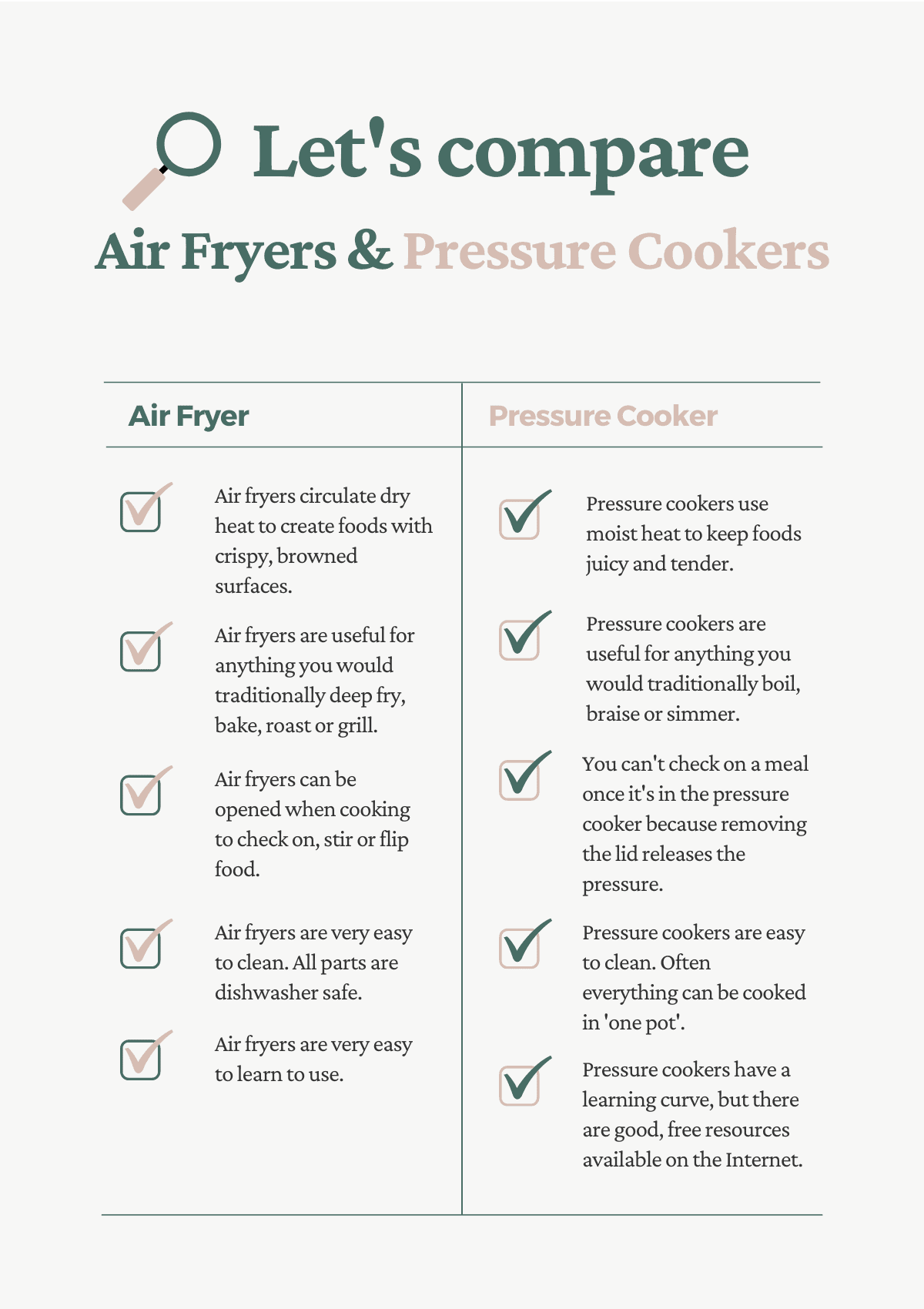
Image Source: www.caiteyjay.com
Deciphering the Basics: Pressure Cookers and Air Fryers
Before diving into a detailed comparison, it’s helpful to understand the fundamental principles of each appliance.
What Is a Pressure Cooker?
A pressure cooker is a sealed pot that uses steam under pressure to cook food quickly. The increased pressure raises the boiling point of water, allowing food to cook at a higher temperature than usual. This drastically reduces cooking time.
What Is an Air Fryer?
An air fryer is a countertop convection oven that circulates hot air around food to cook it. This rapid air circulation creates a crispy exterior, similar to deep-fried food, using little to no oil.
Cooking Methods Compared: A Deep Dive
Both appliances offer distinct cooking methods that influence the final result.
Pressure Cooking: The Science of Speed
Pressure cooking involves sealing food in a pot with liquid. As the pot heats, steam builds pressure inside. This high-pressure environment forces moisture into the food, resulting in faster cooking times and tender textures.
Air Frying: The Art of Crispy Perfection
Air frying relies on the Maillard reaction, a chemical reaction between amino acids and reducing sugars that gives browned food its distinctive flavor and color. The hot air circulating in the air fryer rapidly browns the outside of the food, creating a crispy texture.
Pressure Cooker Advantages Air Fryer: Key Benefits
Each appliance has its own set of advantages. Let’s explore what a pressure cooker offers over an air fryer.
Speed and Efficiency
Pressure cookers are known for their speed. They can cook meals in a fraction of the time compared to traditional cooking methods. This is especially useful for tough cuts of meat or dishes that typically require long simmering times.
- Reduces Cooking Time: Can cook meals up to 70% faster.
- Saves Energy: Shorter cooking times translate to lower energy consumption.
- Tenderizes Food: Ideal for tough cuts of meat and beans.
Retaining Nutrients
Because of the shorter cooking times and sealed environment, pressure cookers help retain more nutrients in food compared to other cooking methods.
Versatility
Pressure cookers are incredibly versatile. They can be used for:
- Braising: Tenderizing meats.
- Steaming: Cooking vegetables and seafood.
- Making Soups and Stews: Combining flavors in a single pot.
- Cooking Grains: Rice, quinoa, and other grains cook quickly and evenly.
One-Pot Cooking
Pressure cookers excel at one-pot meals, reducing cleanup and simplifying the cooking process.
Air Fryer Benefits Pressure Cooker: Exploring the Advantages
Now, let’s examine the advantages of air frying compared to pressure cooking.
Crispy Texture
Air fryers are masters of creating crispy textures without the need for excessive oil. This makes them a healthier alternative to deep frying.
- Mimics Deep Frying: Achieves a similar crispy texture with less fat.
- Even Cooking: Hot air circulation ensures even browning.
- Quick Preheat: Heats up faster than a conventional oven.
Healthier Cooking
By using little to no oil, air fryers reduce the fat content of food, making them a healthier option for those watching their calorie intake.
Ease of Use
Air fryers are generally simple to use, with intuitive controls and preset programs for various foods.
Compact Size
Air fryers are often smaller and more compact than pressure cookers, making them a good choice for smaller kitchens.
Cooking Time: A Side-by-Side Comparison
Let’s look at how cooking times compare for common dishes in a pressure cooker versus an air fryer.
| Dish | Pressure Cooker Time | Air Fryer Time |
|---|---|---|
| Chicken Breast | 8-10 minutes | 15-20 minutes |
| French Fries | N/A | 15-20 minutes |
| Ribs | 25-30 minutes | 30-40 minutes |
| Vegetables | 3-5 minutes | 10-15 minutes |
Note: These are approximate cooking times and may vary depending on the specific recipe and appliance.
Taste Difference: Discerning the Flavors
The cooking method significantly impacts the final taste of the dish.
Pressure Cooker: Intense Flavors
Pressure cooking tends to concentrate flavors, resulting in rich and intense tastes. The sealed environment prevents moisture loss, keeping food moist and flavorful.
Air Fryer: Crispy and Browned
Air frying enhances the natural flavors of food by creating a crispy, browned exterior. The Maillard reaction contributes to a savory, umami-rich taste.
Texture Comparison: Examining the Results
The texture of food cooked in a pressure cooker and an air fryer can differ significantly.
Pressure Cooker: Tender and Moist
Pressure cooking produces tender and moist results, especially for meats and vegetables. The high-pressure environment breaks down tough fibers, creating a melt-in-your-mouth texture.
Air Fryer: Crispy and Slightly Dry
Air frying creates a crispy exterior while maintaining a slightly drier interior. This is ideal for foods like french fries, chicken wings, and other items where crispness is desired.
Energy Efficiency: Which Appliance Saves More?
Both pressure cookers and air fryers are generally more energy-efficient than traditional ovens, but let’s examine which one comes out on top.
Pressure Cooker: Energy Saver
Unlock culinary speed and savings with pressure cookers. Their sealed chambers trap heat and moisture, slashing cooking times and requiring less energy to bring meals to perfection.
Air Fryer: Efficient but Slightly Less So
Air fryers are also energy-efficient, but they typically require a longer cooking time than pressure cookers. This means they may consume slightly more energy overall.
Health Benefits of Pressure Cooking vs Air Frying: Making Informed Choices
Both appliances can contribute to healthier cooking, but in different ways.
Pressure Cooking: Nutrient Retention
As previously mentioned, pressure cooking helps retain more nutrients in food compared to other cooking methods. This is because the shorter cooking times minimize nutrient loss.
- Vitamins and Minerals: Preserves heat-sensitive vitamins like Vitamin C and folate.
- Antioxidants: Retains antioxidant compounds in vegetables.
Air Frying: Reduced Fat Intake
Air frying significantly reduces the amount of fat needed to cook food, making it a healthier option for those looking to lower their fat intake.
- Lower Calories: Reduces the overall calorie content of meals.
- Less Oil: Eliminates the need for deep frying, which can add unhealthy fats.
Appliance Comparison: Key Features to Consider
Here’s a table summarizing the key features of pressure cookers and air fryers.
| Feature | Pressure Cooker | Air Fryer |
|---|---|---|
| Cooking Method | Steam under pressure | Hot air circulation |
| Cooking Time | Shorter | Moderate |
| Texture | Tender and moist | Crispy and slightly dry |
| Taste | Intense flavors | Crispy, browned flavors |
| Health Benefits | Nutrient retention | Reduced fat intake |
| Versatility | Braising, steaming, soups, grains | Frying, baking, roasting |
| Energy Efficiency | High | Moderate |
| Ease of Use | Can be complex with pressure release mechanisms | Simple and intuitive |
| Cleaning | Requires careful cleaning of sealing ring | Easy to clean, often with dishwasher-safe parts |
| Size | Can be bulky | Compact |
Choosing the Right Appliance for You
The best appliance for you depends on your cooking preferences, lifestyle, and dietary goals.
When to Choose a Pressure Cooker
- You value speed and efficiency.
- You want to cook tough cuts of meat quickly.
- You enjoy one-pot meals.
- You prioritize nutrient retention.
- You want to cook large quantities of food.
When to Choose an Air Fryer
- You want to create crispy textures without excessive oil.
- You prefer simple and easy-to-use appliances.
- You have limited kitchen space.
- You enjoy fried foods but want a healthier alternative.
- You want to quickly reheat leftovers.
Frequently Asked Questions (FAQ)
Can I use my pressure cooker as an air fryer?
No, pressure cookers and air fryers use different cooking methods and cannot be used interchangeably. Some multi-cookers offer both functions, but they operate separately.
Can I use my air fryer as a pressure cooker?
No, air fryers are not designed to handle pressure cooking. Attempting to use them as such could be dangerous.
Is air frying healthier than deep frying?
Yes, air frying is significantly healthier than deep frying because it uses little to no oil.
Is pressure cooking healthier than other cooking methods?
Yes, pressure cooking can be healthier because it retains more nutrients due to shorter cooking times.
What are some common dishes I can cook in a pressure cooker?
Common dishes include soups, stews, chili, beans, rice, and pot roast.
What are some common dishes I can cook in an air fryer?
Common dishes include french fries, chicken wings, onion rings, and roasted vegetables.
Are pressure cookers safe to use?
Yes, modern pressure cookers are designed with multiple safety features to prevent accidents. However, it’s essential to follow the manufacturer’s instructions carefully.
Are air fryers easy to clean?
Yes, most air fryers have non-stick surfaces and dishwasher-safe parts, making them easy to clean.

I’m the recipe developer and food photographer behind Air Fryer at Tiffany’s. I’m also a wife, mom to two adventurous little boys, registered nurse, and live in the great Midwest. Join me as I show you new ways to use your air fryer that you never knew possible.